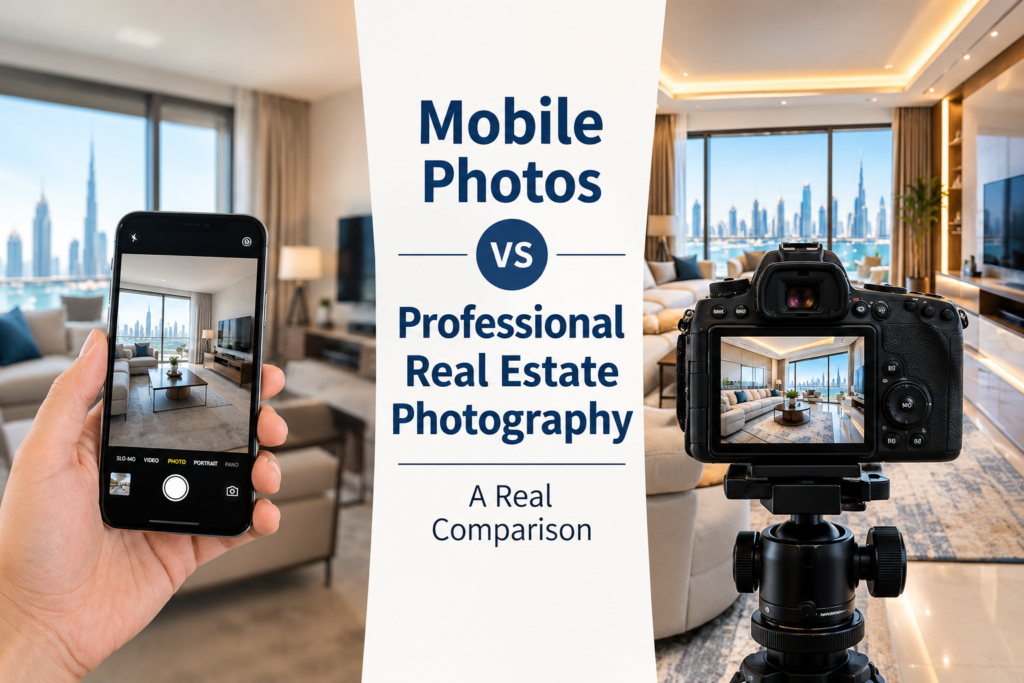
Mobile Photos vs Professional Real Estate Photography: A Real Comparison
When selling or renting a property, high-quality photographs are often the first impression for potential buyers and tenants browsing property portals, real estate websites, social media, and agency listings. While smartphones can produce good images for quick documentation, professional real estate photography goes further by using careful composition, lighting, perspective, exposure, editing, and property preparation to present a space effectively. This is particularly important in Dubai, where properties range from apartments and holiday homes to luxury villas, penthouses, offices, and large developments. Professional real estate photography in Dubai can be tailored to the property’s architecture, features, location, target audience, and marketing needs, helping property owners and agents present their listings more effectively.
Mobile Property Photography vs Professional Real Estate Photography
The biggest difference is not simply the camera. It is the complete process behind the final image.
A smartphone combines a camera, automatic exposure, HDR processing, computational photography, and editing tools in one convenient device. This makes it possible to create attractive photographs quickly.
Professional real estate photography, on the other hand, generally involves a planned photoshoot, appropriate lenses and equipment, deliberate composition, lighting decisions, exposure management, perspective control, and professional post-production.
What Mobile Photography Does Well
Smartphones are useful when speed and convenience are the main priorities.
Quick property documentation
Renovation progress photographs
Temporary rental or resale updates
Social media updates
Personal records of rooms and furniture
Quick communication with property managers or contractors
For example, a landlord may want to photograph a newly renovated kitchen and immediately send the images to a property manager. A smartphone can handle this task efficiently.
The problem begins when casual photographs are expected to represent the property in a competitive sales or rental listing.
What Professional Real Estate Photography Adds
Professional real estate photographers approach the property as a visual marketing subject rather than simply documenting it.
They determine which rooms and features deserve priority.
They select angles that communicate space and layout.
They manage difficult lighting conditions.
They photograph interiors and exteriors consistently.
They can use HDR techniques to balance bright windows and darker interiors.
They consider perspective and lens selection.
They edit photographs to create a consistent visual presentation.
They can create images suitable for property listings and marketing campaigns.
The goal is not simply to make the property look attractive. The goal is to communicate the property clearly and give potential buyers or tenants useful visual information.
It is easy to assume that professional photography is simply about using an expensive camera. In reality, the camera is only one part of the process.
A professional photographer also has to decide where to stand, what to include in the frame, which lens to use, how to manage natural and artificial light, and how the final photograph should be edited.
Composition Changes How a Property Looks
Consider a living room photographed from directly beside a wall.
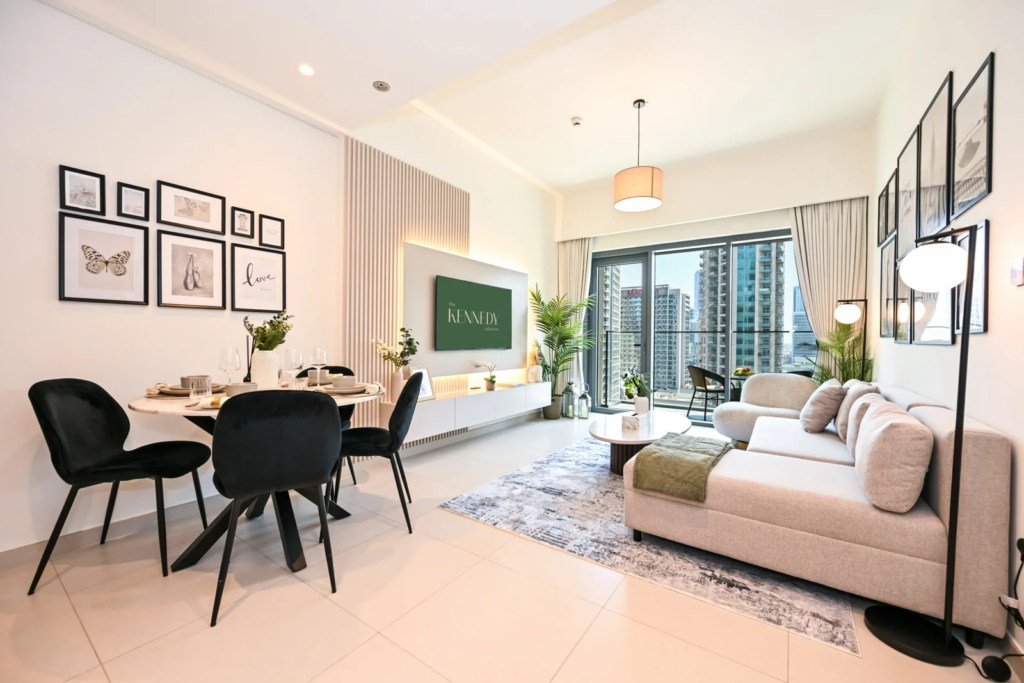
The photograph may be sharp, but it may show very little of the room. A professional photographer may instead select a position that shows the relationship between the living area, windows, kitchen, balcony, dining area, or other important features.
This creates a better understanding of how the property is organized.
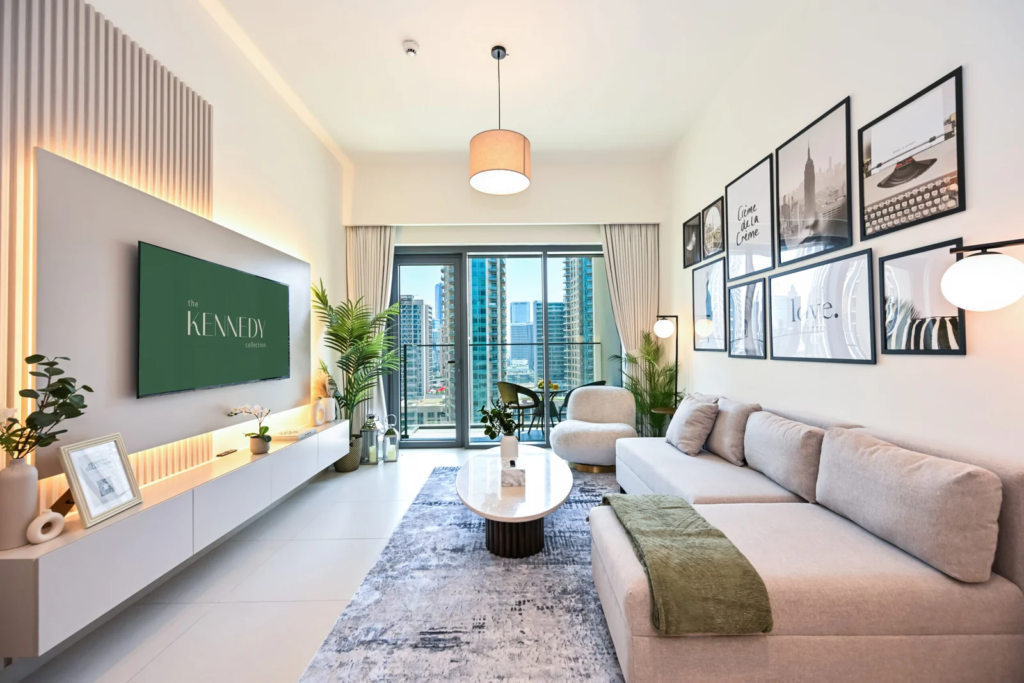
Example: Dubai Marina Apartment
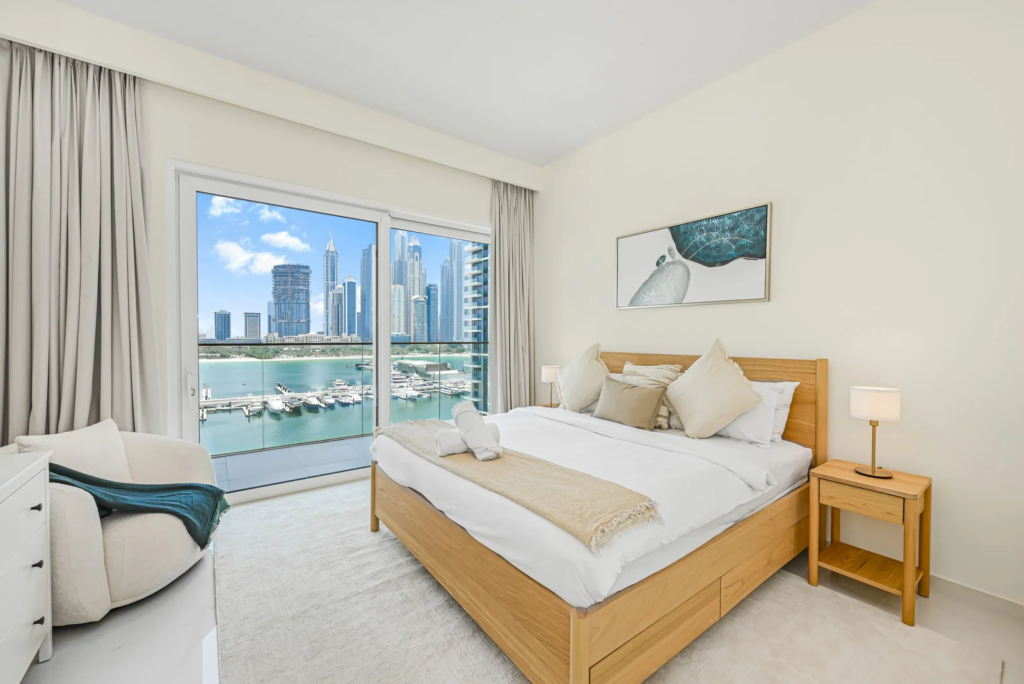
Imagine a Dubai Marina apartment with a modern living room and a marina view.
A quick mobile photograph might show the sofa, television, and part of the window.
A carefully planned real estate photograph could show:
The overall living area
The relationship between the seating area and windows
The marina or skyline view
Natural light entering the room
Flooring and architectural details
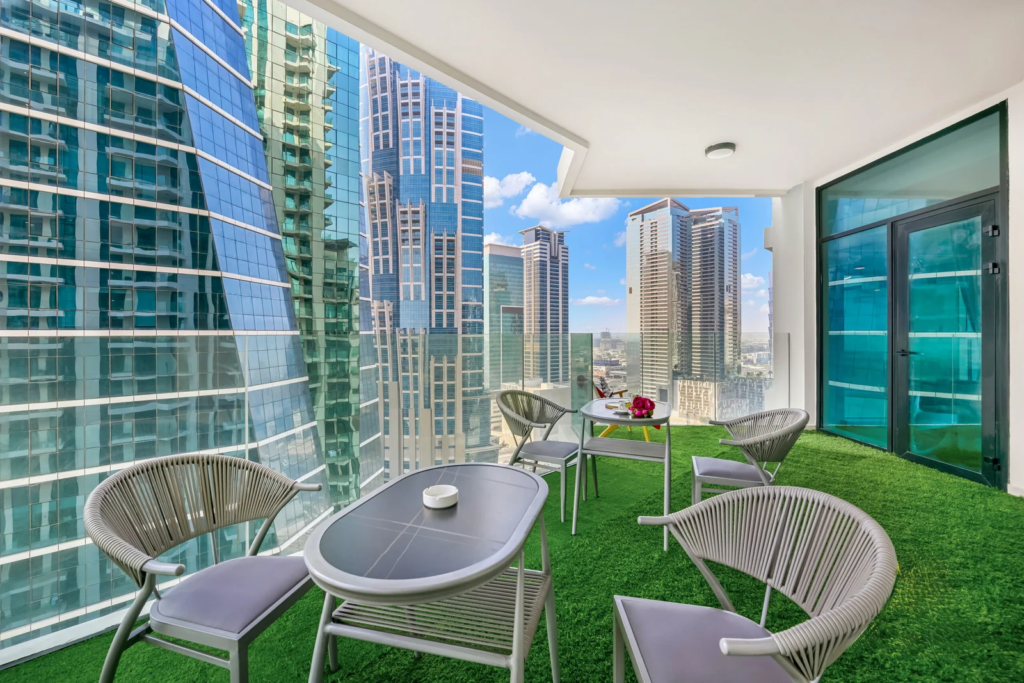
The connection between indoor and outdoor areas
The second approach provides more useful information from a single photograph.
Lighting Is a Major Difference
Lighting is one of the most challenging parts of property photography.
A room may contain dark furniture while strong sunlight enters through large windows. If the exposure is adjusted for the interior, the windows can become extremely bright. If the exposure is adjusted for the windows, the interior may become too dark.
Professional real estate photography allows the photographer to plan around these differences.
Why HDR Matters in Real Estate Photography
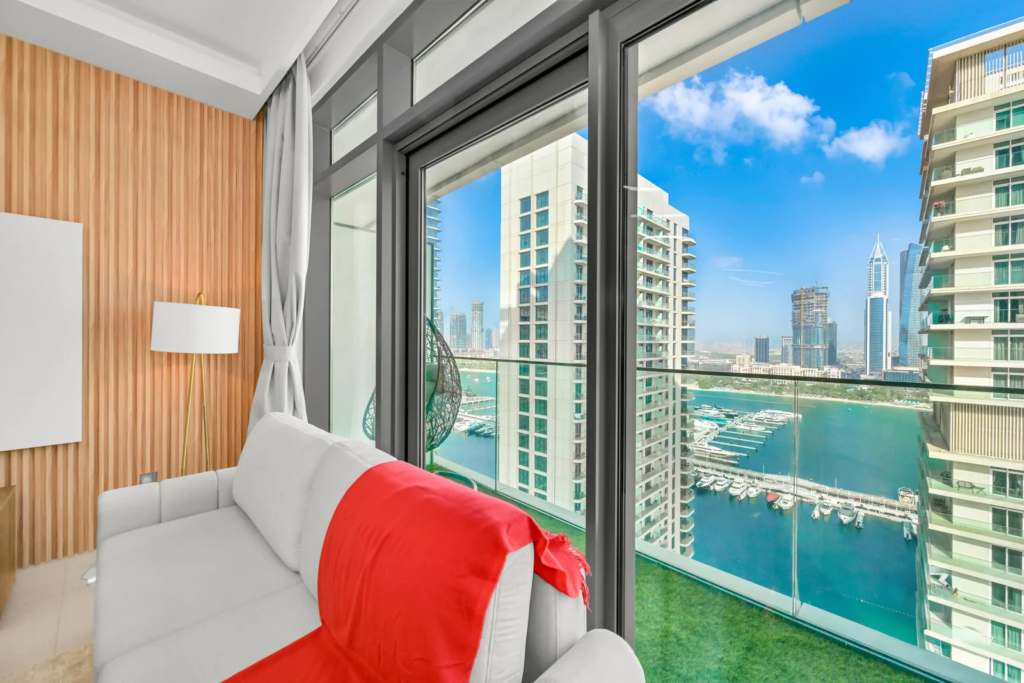
HDR, or High Dynamic Range photography, can help manage scenes containing significant differences between bright and dark areas.
Multiple exposures can be combined during post-production to create a more balanced photograph. This can be particularly useful for properties with large windows, balconies, bright outdoor views, and darker interiors.
HDR can be useful for:
Floor-to-ceiling windows
Strong outdoor sunlight
Skyline views
Bright balconies
Glass doors
Darker interior furniture
Rooms with mixed lighting conditions
Modern smartphones often use automatic HDR processing, and this can produce very good results. However, professional photography provides greater control over the complete process, from capturing exposures to deciding how the final image should look.
Perspective and Lens Choice Matter
Another important difference is perspective.
Smartphones often provide multiple lenses and computational processing to create different fields of view. This is convenient, but professional cameras and lenses can give photographers greater control over how a room is represented.
Avoiding the Too-Wide Problem
A common mistake in property photography is using an excessively wide angle simply to make a small room appear larger.
This can create unnatural proportions. Furniture close to the camera may appear unusually large, while objects farther away can look disproportionately small.
Professional real estate photographers need to balance coverage with realistic representation. The objective should be to communicate the available space without creating a misleading impression.
Example: Small Bedroom
A mobile phone held very close to a bed might capture the bed, wardrobe, window, and walls in one frame.
However, the perspective could make the foreground furniture appear oversized.
A professional photographer can select an appropriate position and lens so the photograph communicates the room while maintaining more natural proportions.
Professional Editing Creates Consistency
Taking the photograph is only one stage of the process.
Professional real estate images often require post-production to improve consistency and correct technical issues.
Common Editing Tasks
Depending on the project, editing may include:
Exposure correction
White-balance adjustment
Colour correction
Contrast adjustment
Highlight and shadow balancing
Perspective correction
Minor distracting-element cleanup
Consistent cropping and formatting
The purpose of editing should be to improve presentation while maintaining an accurate representation of the property.
Over-editing can create a different problem. If colours, room dimensions, views, or features are manipulated excessively, the final image may create expectations that do not match the actual property.
Good property photography should therefore balance visual appeal with authenticity.
Mobile Photos vs Professional Real Estate Photography: Quick Comparison
Factor
Mobile Property Photos
Professional Real Estate Photography
Convenience
Very high
Requires scheduling
Equipment
Smartphone
Professional camera, lenses, and supporting equipment
Lighting control
Mostly automatic
Planned and controlled
Composition
Usually quick and informal
Planned around room layout and selling points
HDR control
Often automatic
Deliberately managed during capture and editing
Perspective control
More limited
Greater control through lens and camera positioning
Editing
Phone apps or automatic processing
Professional colour, exposure, and perspective adjustments
Consistency
Can vary between rooms
Planned for a consistent property presentation
Listing presentation
Suitable for basic documentation
Designed for professional property marketing
Complex interiors
Can be challenging
Better suited to difficult lighting and architectural spaces
Speed
Immediate
Requires shoot and post-production
Best use
Quick updates and documentation
Sales, rentals, and professional marketing
How Poor Property Photos Can Affect the Listing Experience
Photography does not guarantee a sale or rental. Property price, location, condition, availability, amenities, competition, and many other factors influence real estate decisions.
However, photographs influence what potential buyers and tenants see before deciding whether to investigate a property further.
First Impressions Happen Online
Consider two listings for similar apartments.
The first listing has:
Dark interior photographs
Crooked vertical lines
Reflections in mirrors
Furniture blocking important areas
Different colour temperatures between photographs
Weak exterior photographs
The second listing has:
Bright and balanced interiors
Clear room layouts
Consistent composition
Attractive views
Properly presented amenities
Strong exterior photographs
The second listing may communicate the property more clearly. This does not mean photography alone determines which property someone chooses, but it can influence how easily the viewer understands the space.
When Mobile Photos May Be Enough
Professional photography is not automatically necessary for every photograph.
Use a Smartphone When the Goal Is Documentation
A mobile phone can make sense for:
Private records
Renovation progress
Maintenance documentation
Quick communication with contractors
Temporary internal updates
Informal social media content
For example, if a landlord wants to send a property manager a photograph showing a damaged wall or leaking ceiling, the purpose is documentation rather than marketing. A smartphone is appropriate.
Day Photography vs Twilight Photography
Professional real estate photography can also include different times of day depending on the property’s features and marketing objectives.
Daytime Photography
Daytime images are generally useful for showing:
Room dimensions and layout
Natural light
Interior finishes
Gardens
Balconies
Views
Exterior surroundings
Twilight Photography
Twilight photography creates a different presentation for exterior spaces.
It can emphasize:
Architectural lighting
Swimming pools
Outdoor seating
Balconies
Building exteriors
Evening atmosphere
For properties with attractive exterior lighting, pools, terraces, or landscaped gardens, twilight photographs can provide additional visual variety.
Photography Should Match the Property Marketing Strategy
A common mistake is deciding on photography before deciding what the property needs to communicate.
Start With the Property’s Selling Points
Before the photoshoot, identify the features that distinguish the property.
Example: Dubai Marina Apartment
Marina view
Balcony
Modern kitchen
Open living area
Building amenities
Example: Dubai Hills Villa
Garden
Swimming pool
Multiple bedrooms
Family living spaces
Community surroundings
Example: Business Bay Office
Reception
Meeting rooms
Open workspace
Building exterior
Location advantages
This information can help the photographer plan the shoot instead of simply photographing every room from the same position.
Choosing a photographer should involve more than looking at camera equipment.
Review Relevant Property Portfolios
Look for examples that resemble your property.
Apartments
Villas
Penthouses
Holiday homes
Commercial properties
Furnished properties
Unfurnished properties
A photographer experienced in portraits may be talented but may not necessarily specialize in interiors, architecture, and property layouts.
Ask About the Complete Workflow
Before booking, ask about:
Number of final photographs
Editing and retouching
HDR photography
Day and twilight coverage
Delivery time
Property portal formatting
Video options
Additional locations or amenities
Drone photography where appropriate and legally permitted
Understanding the complete service can help property owners compare photography packages based on actual requirements rather than camera specifications alone.
Detail photographs can help communicate quality and design.
Examples include:
Kitchen finishes
Bathroom fixtures
Decorative lighting
Architectural details
Flooring
Premium materials
Door handles
Built-in storage
Pool features
Outdoor furniture
For a luxury property, these details can complement wider photographs and give viewers a better understanding of the property’s finishes.
Why Consistency Matters Across the Full Property Gallery
Imagine a property listing with 20 photographs.
The first five images are bright and professionally composed. The next five are dark smartphone photographs. The remaining photographs have different colours and perspectives.
Even if the property itself is attractive, the gallery can feel inconsistent.
A professionally planned photoshoot aims to create a cohesive visual sequence.
A Logical Photo Sequence Can Help
A property gallery can move naturally through the property:
Exterior or hero photograph
Main living area
Kitchen
Bedrooms
Bathrooms
Additional living spaces
Balcony or terrace
Amenities
Views
Architectural details
Additional exterior photographs
The exact sequence should depend on the property and the marketing platform.
Mobile Photography vs Professional Photography: Think About the Purpose
The smartphone-versus-camera debate can sometimes miss the most important question.
The real question is:
What does the photograph need to accomplish?
A smartphone photograph can document a property quickly.
Professional real estate photography can be planned as part of a property’s marketing strategy.
For someone selling or renting a property, this distinction is important because listing photographs are not simply records. They are part of the property’s first visual presentation to prospective buyers and tenants.
Final Thoughts
Mobile photography is convenient, fast, and increasingly capable. For documentation, quick updates, maintenance records, and informal photographs, a smartphone can be an effective tool.
However, professional property photography involves much more than pressing the shutter button. Composition, lighting, exposure, perspective, editing, property preparation, consistency, and marketing requirements all contribute to the final result.
For sellers, landlords, property agents, and developers in Dubai, professional real estate photography in Dubai can provide a structured visual presentation for apartments, villas, penthouses, holiday homes, offices, and other property types.
The right choice ultimately depends on the purpose of the photographs. If you simply need a record of a room, a mobile phone may be enough. If the photographs are going to represent your property to potential buyers or tenants, working with experienced real estate photographers can provide a more deliberate, consistent, and marketing-focused presentation.
If you are preparing a property for sale or rent and need professional real estate photography in Dubai, ZH Photography Studio provides property photography services designed for different types of residential and commercial spaces. You can explore the service page to understand the available photography options and plan coverage according to your property’s requirements.
Ready to make every moment unforgettable? Whether it's a striking portrait, a dynamic event, or a stunning product shot, our expert photographers are here to bring your vision to life.